
There are few topics in blues guitar that cause as much confusion as the modes. To start, the theory can feel dense, and every mode has a Greek name, which doesn’t make it any easier (unless you happen to be Greek!)
Not only this, but for students it often feels like there’s a huge gap between regular minor an major pentatonic playing, and everything the modes offer on the other side.
If you’re currently struggling with this, then I have good news! Using the modes in your playing isn’t nearly as difficult as it looks once you understand what’s actually going on. That’s what this lesson is about.
What are the modes?
The modes are a series of scales built from the parent major scale.
Let’s take the C major scale, which has no sharps or flats and is nice and easy to visualise. Here is what the scale looks like:
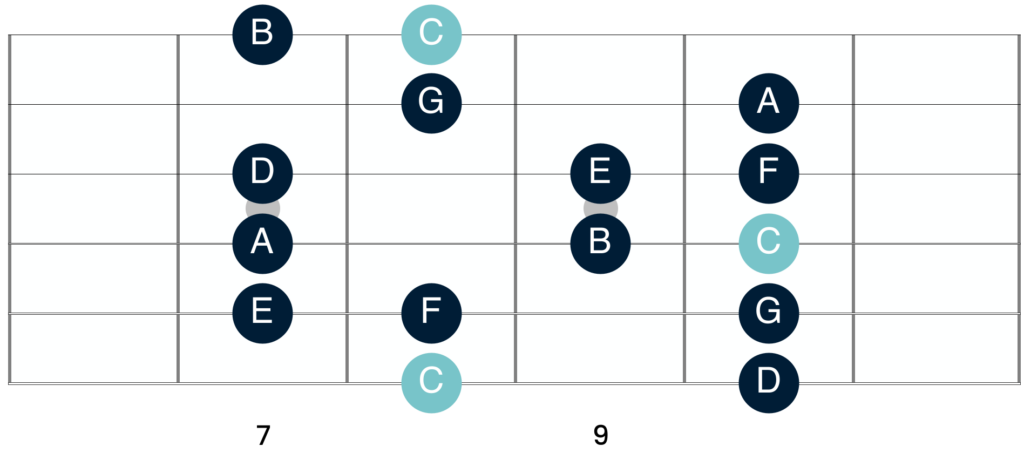
We can create a series of scales (modes) built from each of the degrees of that scale.
So we can create a scale that starts on D, or E or F etc.
The notes in all of these scales are exactly the same, which is what guitarists often find so confusing. How can the scales sound different if the notes are all the same?
The answer lies in what we treat as the tonic or musical home base. Shifting this alters everything. It alters the intervals in the scale, the chord progression you play over, and the points of tension and resolution in the scale.
So even though all seven modes share the same seven notes, you end up with seven scales that each have a completely different flavour and function.
That’s the core theory, and the main concept that is useful to understand when playing the modes. If you want to go deeper however, then I’d recommend heading to this article here – An introduction to playing the modes on your guitar
In this lesson we’re focusing on the Aeolian mode. This is the sixth mode of the major scale, built on the sixth degree. In the key of C, that means starting your C major scale from the note of A, which gives you the A Aeolian mode.
For this lesson, though, we’re going to stay in the same part of the fretboard and look at C Aeolian instead, using Carlos Santana’s instrumental “Europa” as a reference point, as it is such a good stylistic study of how to use the Aeolian mode.
Here is what the first shape of the C Aeolian mode looks like – with my suggested fingerings and the tonic notes highlighted in light blue:
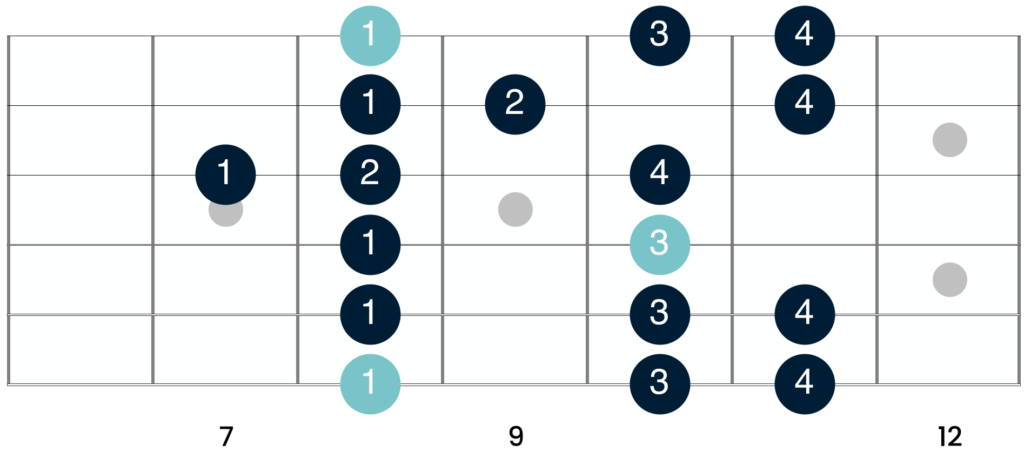
If you play that scale up and down you can hear that it doesn’t have a particularly bluesy flavour. This means that even once you understand the theory and can play the scale shapes, it can be challenging to actually solo using them.
How do you use the scale in your playing, without losing the feel of the classic blues licks you might have spent years working?
This is where a simple shift in perspective makes all the difference:
The trick that will unlock the modes
On first glance, the Aeolian shape above looks like a brand new scale you’ve never encountered. It’s a seven note scale, and the fingerings of the scale are completely different to those of the minor pentatonic scale.
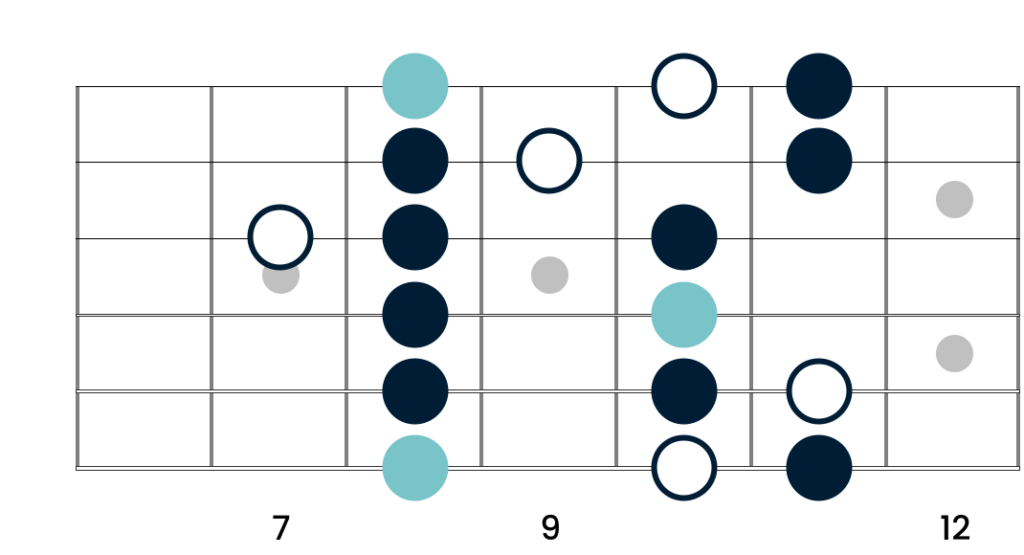
Look closer and you’ll see that five of those seven notes are exactly the same as the first shape of the minor pentatonic scale you already know. You can see this if we compare them laid out next to each other:
C Aeolian Mode
C Minor Pentatonic
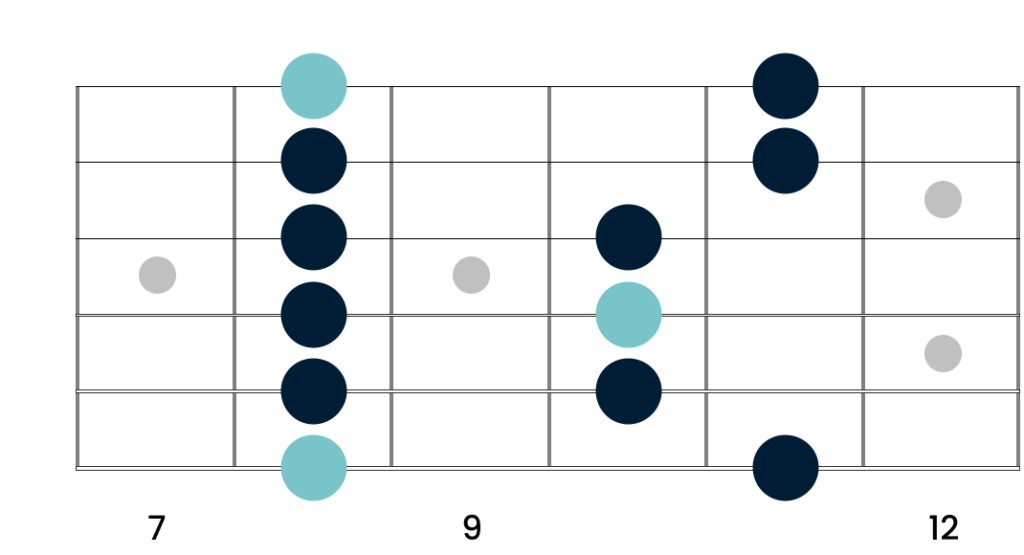
The “new” notes from the Aeolian mode are coloured in white here, showing you the five notes from the familiar minor pentatonic scale underneath.
In this way you can start to think of the Aeolian mode as your trusty minor pentatonic scale with two new notes added in.
Appreciating this changes everything, because you don’t need to learn any new vocabulary from scratch. You can instead keep using the pentatonic phrasing you’ve already built, and then dip out to grab the two new notes from the Aeolian mode in a very intentional way.
This gives you the best of both worlds, as you can target modal ideas in your playing, without losing the more classically bluesy sounds that comes from the minor pentatonic.
Colour Note I: The Major Second (or Ninth)
The first new note in the Aeolian mode that isn’t in your minor pentatonic scale is the major second. Pushed up an octave, it becomes the ninth. In C minor, you’ll find it on the 10th fret of the low E string, the 10th fret of the high E string, and the 7th fret of the G string:
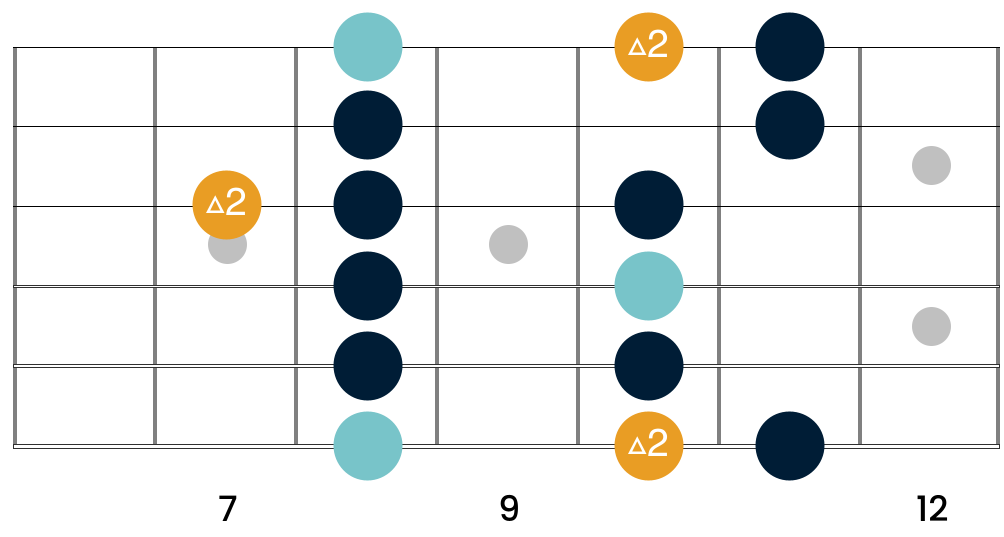
This is one of my favourite intervals on the guitar, and one that is extremely versatile. It shows up in most of the minor modes, as well as the major scale, major pentatonic, and the Mixolydian mode.
Even though it’s a major interval it sounds amazing in both major and minor contexts, which means that you can use it in your playing with almost no worry of creating any dissonance or tension.
Here are a few of the ways I think about targeting it:
- Within a phrase. Just work it in alongside your usual pentatonic licks. Target it with slides, hammer-ons, pull-offs, or whatever sounds good to you. Treated in this way, it just adds an extra shade of colour to your licks, without altering their fundamental flavour.
- Bend it into the flat third. Bending up a semitone from the ninth into the minor third (the powerhouse note of both the pentatonic and Aeolian scales) sounds fantastic. You’ll hear players like Gary Moore and Joe Bonamassa use this idea all the time, and it has a very cool blues rock vibe.
- Resolve to it. Carlos Santana often lands on this note as a point of resolution rather than passing through it. You can hear him do this in “Europa,” but it’s also one of the reasons why his version of “Black Magic Woman” sounds so distinctly Latin rather than classically bluesy, like the version by Fleetwood Mac.
These are just some of the options available, which I outline in more detail in this video lesson here if you’d like to go deeper on the topic.
For now though, experiment in this contained section of the fretboard and try to work the new note in alongside your regular pentatonic licks.
Colour Note II: The Flat Sixth
The second colour note in the Aeolian mode is the flat sixth. In this first position shape, you’ll find it here:
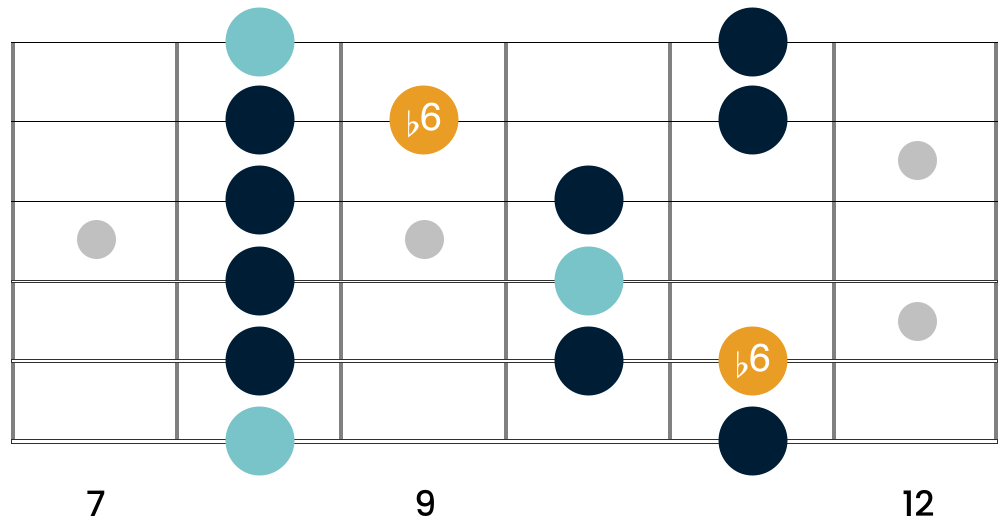
You have to approach this note with a bit more caution.
This is because over the i chord in any key it will create quite a fairly harsh and tense sound. That tension can work if it’s intentional, but if you land there by accident it’s going to sound off.
Where it works very well is over the iv chord. In a C minor blues, that iv chord is F minor, which we can play in the same position as the scale we’ve been focusing on:
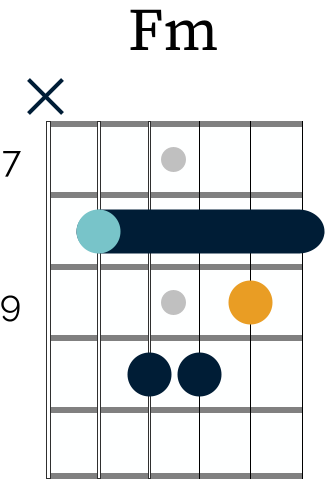
As you can hopefully see, the flat sixth from the scale appears within the F minor chord at the 9th fret (it’s the note of Ab). So if you target that note while the F minor chord is being played, you spell out that chord change beautifully.
This specific move appears all the time in minor blues songs. Led Zeppelin’s “Since I’ve Been Loving You” is a great example of this in the same key. Jimmy Page opens with straightforward C minor pentatonic phrasing, brings in the major second, then hits that flat sixth right as the harmony moves toward the iv chord.
Gary Moore does exactly the same thing in the slow blues ballad “Midnight Blues.” He starts by playing the C minor pentatonic scale, and then plays the three individual notes of the F minor triad (F, Ab, C) as the full F minor chord is being played.
Getting to this note over the chord change is a brilliant first step. It’s also one that you can replicate in any key, as in a typical minor blues track you will always encounter this i to iv chord change.
Once you can get to that note on time and can add it into your licks, the next step is to then add technique. Otherwise the movement will sound slightly mechanical and lack the smooth, musical quality we want from our blues solos.
So instead of just playing the note, think about using slides, or hammer-ons or pull-offs to make the idea sound more musical. You can also bend a semitone up to it from the fifth. This is my favourite option, and sounds amazing, especially when compared to just playing the note.
Option III: Target the notes next to each other
There’s one more way to bring modal colour into your playing without thinking about intervals or chord changes at all.
When you play the minor pentatonic scale, no two notes ever sit directly next to each other; they’re always separated by two or three frets.
Once you move into the modes, that changes, as in each scale shape you’ll find spots where two notes sit right next to one another. These specific note groupings differ between different modes. So by targeting them – even briefly – you can create the flavour of the mode in your playing, without thinking about theory at all.
Jimmy Page does this in the intro to “Since I’ve Been Loving You,” and Rory Gallagher often leans on the same idea for fast, flurrying runs. His blistering solo in the Taste song “What’s Going On” is an amazing example of this.
Putting it all together
Once you start layering these colour notes in, you have real control over how far you push the sound.
On one side of the spectrum you can just pepper those modal notes in very lightly, keeping your playing very grounded in the blues, with a few additional flavours being added in only fleetingly.
On the other, you can go full Carlos Santana mode and create licks that don’t sound bluesy at all, and really bring out the sound of the mode.
Either of these options is fine – you just want to make sure that you are being intentional in your approach and not just landing on notes randomly because they appear in the scale shape.
So as you are working on this, there are three things that you can focus on to determine where you land on that spectrum:
- Duration. Hang on a colour note and you’ll bring far more of its flavour into the phrase than if you touch it briefly in passing.
- Density. The more often you return to these notes, the further you move from classic blues territory. Santana’s “Europa” intro is dense with Aeolian colour, which is exactly why it sounds so different from a standard blues solo.
- Placement. Resolving a phrase on the ninth immediately conjures a “Black Magic Woman” style sound. Slot the same note in the middle of a phrase instead, and it becomes a passing colour rather than a defining flavour.
None of these approaches is right or wrong, it’s just all comes down to intention.
If you want a classically bluesy sound with a little extra flavour, start cautiously. It’s much easier to add spice as a solo develops than to backtrack from full Latin flavour to straightforward blues.
And if you ever feel lost, remember that the minor pentatonic scale is always still there underneath everything.
Fall back on it, find your footing again, and then go looking for the colour notes when the moment calls for it. This is a tool for your toolbox, not something you need to reach for in every single phrase.
Beyond the Aeolian mode
As a final point, it’s worth noting that the same relationship holds across all seven modes.
Dorian is a minor mode, and looks like this in the key of C:
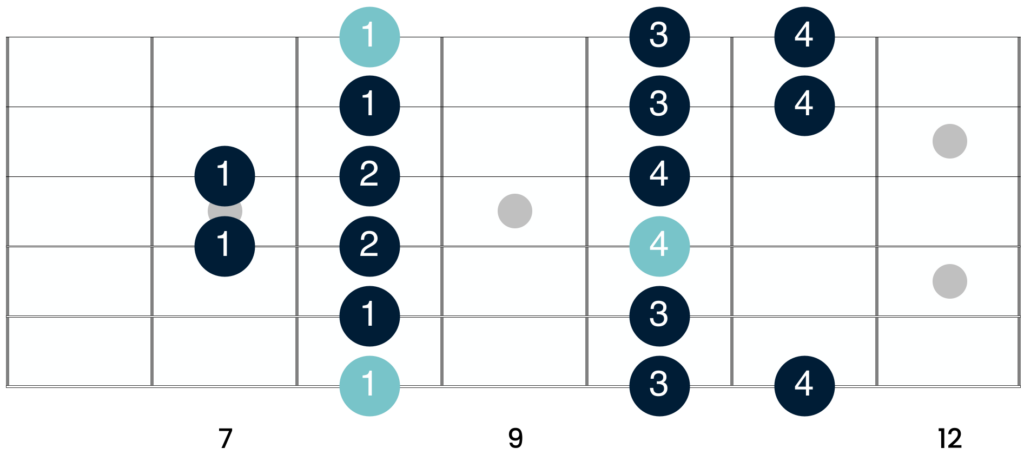
And now that you know this minor pentatonic “trick,” you can hopefully see that the C minor pentatonic scale is right there within the scale shape. The only difference compared with the Aeolian mode is that the new notes from the mode have now changed.
This relationship holds for all of the minor modes. The same is also true for the major modes, it’s just that now it’s the major pentatonic scale hiding within the broader modal shape.
For example, this is what the C Mixolydian mode looks like, compared with the major pentatonic scale in the same position:
C Mixolydian Mode

C Major Pentatonic
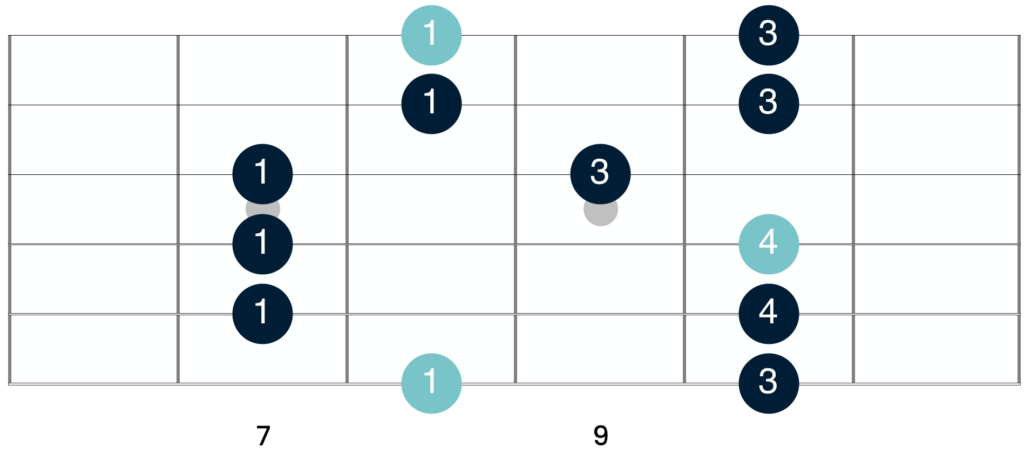
The fingerings of the scales are different, and they might feel like quite different shapes to play, but as you can see from the diagrams above, 5 of the 7 notes are the same.
This will obviously take some time to put into practice in your playing, but the important point is that once you understand this approach, you can apply it to every mode you’re likely to use in your blues playing.
Good luck, and let me know how you get on in the comments below!
And if you want all of these modal scales laid out and ready to use, my free Essential Blues Scales guide covers the Aeolian, Dorian, and Mixolydian modes alongside the major and minor pentatonics and the blues in seven different keys.
So you have all of the scales you’re likely to run into as a blues player, in all of the different keys you’re going to play, along with example songs where you can hear those scales being used. You can download it for free here:
Feature Image – Alamy




Responses