
Layla and Other Assorted Love Songs is one of my favourite blues rock albums of all time.
The album is full of intensity and feeling, the songs are some of Clapton’s best, and the playing from both Eric Clapton and Duane Allman is incredible.
There are so many brilliant songs on the record, but one of those which I find most instructive for us as blues guitarists is “Have You Ever Loved a Woman?“
The song was originally written and recorded by Billy Myles, then covered beautifully by Freddie King, and then covered again by Clapton on the Layla album.
What I think makes the Clapton version so powerful is the personal context behind it. When he recorded the album Clapton was deeply in love with Patti Boyd, who at the time was married to George Harrison – one of his closest friends.
This background gives a totally new meaning and depth to the track and to lyrics like “Have you ever loved a woman / So much you tremble in pain? / And all the time you know, yeah / She bears another man’s name“.
It’s the same across the whole album, with tracks like “Layla” and “Bell Bottom Blues” also written about Clapton’s unrequited love.
The lyrics of the tracks are powerful, but so too is the guitar playing – which is full of angst and intensity from the start of the album to the finish.
When it comes to “Have You Ever Loved A Woman?”, there are four key reasons I think it makes such a great study piece. Here’s what you can take from it to use in your own playing:
I – The slow blues shuffle
The track is in the key of C and works in 12/8 time with a beautiful classic shuffle feel. That already presents an interesting challenge – as when you slow a shuffle right down, it becomes harder to stay rhythmically tight. There’s so little rhythmic information supporting you that you have to have the feel fully internalised.
I always think about this like riding a bike. Going fast is challenging, but it is equally difficult to go very slowly. Without the speed to carry you, it’s easy to lose your balance and fall off, and you need a great deal of control to stay upright.
The same thing happens with a slow shuffle. Without that driving momentum underneath you, it’s much easier to drift off the beat and lose where you are in the track.
The best way to work on this is to practice playing your shuffle with a metronome and gradually working to bring the tempo down. So you could start at around 80 BPM and then work down a few beats at a time – moving to 76, 73, 70 and so on.
The key here is to stabilise at each new tempo so you’re really locked into the groove and playing tightly.
Over the weeks and months, you can then aim to push the BPM all the way down to 30 or 40 BPM. If you can do that and stay rhythmically tight at such a low tempo, you will have developed such a solid sense of timing, which will serve you when playing both rhythm and lead.
The chord progression itself is a quick change major blues in C. In many blues tracks based around a shuffle there is a turnaround that serves as an intro but here the track comes straight in and the whole band drops into the 12 bar from the very first beat. The full progression looks like this:
C7 | F7 | C7 | C7
F7 | F7 | C7 | C7
G7 | F7
C7 / F7 | C7 / G7
The first eight bars are very straightforward – it’s simply a quick change 12 bar progression. In the turnaround though things pick up – the progression moves from V to IV, and in the final two bars there are two changes within single bars, moving from I to IV in bar 11 and I to V in bar 12.
At no point are you actually playing these chords, as you are instead playing the shuffle pattern based off the root note of each chord. When you get to that final V chord (G7) however, it’s worth playing it as a full chord rather than continuing the shuffle pattern, as it gives the turnaround more definition and makes the return to the top of the progression feel more natural.
The second thing to notice about the shuffle in this track is the extension. A classic shuffle pattern involves playing a power chord and then stretching out with the little finger to grab the major sixth. In the key of C, it looks like this:
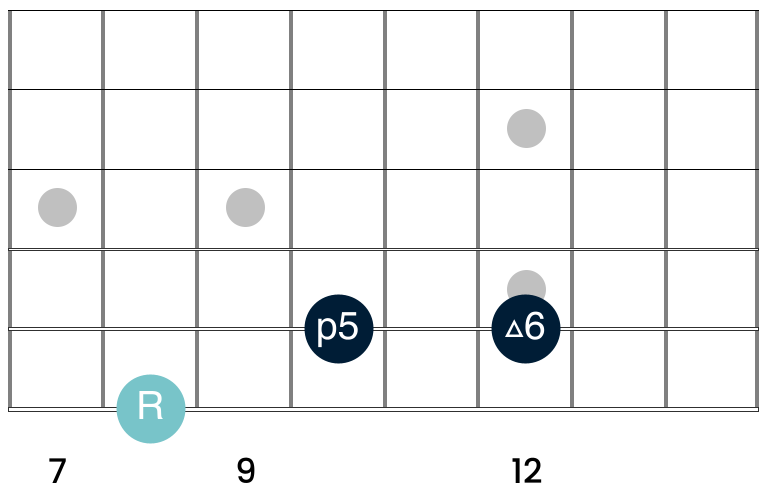
In this track we take that one step further. Instead of the standard pattern where you come back to the root after the major sixth, you stretch the little finger one fret higher to grab the flat seventh. So rather than:
1 – and – a – 2 – and – a – 3 – and – a – 4 – and – a
In the second half of the bar you stretch up to that flat seventh and hang there:
1 – and – a – 2 – and – a – (stretch to flat 7) – and – a – 4 – and – a
In the key of C in which we’re playing, here is where those notes appear on the fretboard for the I chord:
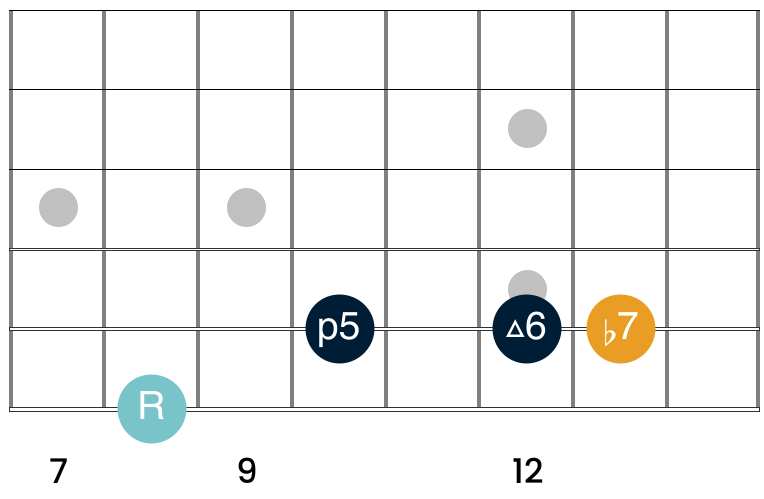
As you can see, there is quite a stretch between the root note and the b7. If you’re finding it difficult to add that note in, try lifting the ring finger off completely so only the little finger is fretting that upper note. That makes the reach a lot easier and will allow you to play the extended pattern more smoothly and cleanly.
Once you can play the extended pattern with precision (and move it around the full progression, which I’ve outlined below), you can start experimenting with what the little finger does.
Does it stay on the flat seventh for the full second half of the bar? Does it come back to the major sixth? Does it move between the two? All of those variations are worth exploring, and each one creates a slightly different feel.
In a track like this one where there is piano also playing the rhythm part, you can’t experiment quite so freely as it’s important to play in sync with the piano. However there are many situations – including any time you’re playing the shuffle as a solo performance – where you can mix things up to bring a lot of life to the rhythm part.
II – Mixing the shuffle with licks
Adding licks into a shuffle is one of the most fun things you can do as a blues guitarist. It sounds amazing, and allows you to create a “call and response” feel with the singer, which is a key part of the blues sound.
This is exactly what Clapton does throughout “Have You Ever Loved a Woman?” – moving between the shuffle and mixing rhythm and lead together in a way that brings much more life and excitement to the track.
There are of course many different ways that you could mix licks into your shuffle. However when you are getting started I’d recommend taking quite a simplistic approach:
Play your shuffle on the one and two and three – and then instead of continuing the shuffle pattern, drop a lick into the mix.
The key here is to keep this nice and short and wrap the lick up cleanly before the next bar arrives, so you can land back on beat one and rejoin the shuffle.
So the structure becomes:
shuffle – shuffle – shuffle – lick – back to one (of the next bar)
In practice I wouldn’t recommend putting a lick into every single bar, as the shuffle itself needs space to breathe and drive the track forward.
Instead, drop licks in occasionally – when you’re sitting on the same chord for long enough to fit a lick in cleanly, or as a connecting idea that leads you into the next chord change.
When used selectively, those moments really stand out and add a lot of interest and energy to the performance.
Once you’re comfortable with adding licks between chords, you can ramp up the complexity by putting together a longer lick over the turnaround section, which is an idea you encounter a lot in these kinds of tracks and which
which is an idea I explore in more detail in my lesson on ‘Texas Flood’ – you can find it here.
In the final two bars of the turnaround, instead of continuing the shuffle rhythm, drop out and play a lead lick. The goal is to land on or around the root note of the V chord – in this case the note of G, which appears in the following position in the first shape of the C minor pentatonic scale:
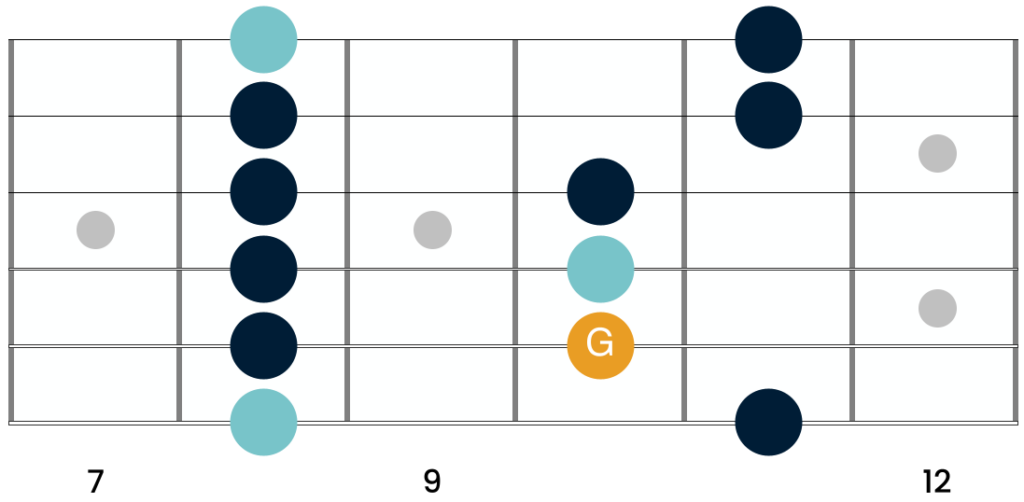
There are so many different ideas that you can execute here. Typically though I like to either aim to hit the note of G right at the end of the bar to create that pull back to the I chord, or to land there a little earlier and then play a lick from the note that pulls me straight back into the top of the shuffle.
Experiment with a few different ideas and see what appeals most to you. Either way just focus on that broader structure in which you play through the turnaround, hit the I chord, then throw a two bar lick that takes you back to the top.
III – Bringing the Blues Power
If you listen to Clapton’s playing across his career, there’s a clear shift at a certain point. In his early years with John Mayall and the Bluesbreakers, Cream, and Derek & the Dominos, there’s an intensity and urgency to everything he does.
He’s digging in, the phrasing is loaded with emotion, and you can hear the angst in every bend. Just listen to any of these tracks to get a sense of what I mean:
- Double Crossing Time – John Mayall & The Bluesbreakers
- Crossroads – Cream
- Layla – Derek & The Dominos
After Clapton and Patti Boyd finally married and he started his solo career, something changed. The playing became calmer, more relaxed, a little less raw. Still great, but a different feel entirely.
“Have You Ever Loved a Woman?” sits right at the peak of those angsty years, and that context matters for how we approach the lead playing. This is not a track for polite, restrained solos. It’s a track for digging in and bringing as much blues power as you can.
It is so easy to get very focused on what we are playing and overlook how we are playing it. But your vibrato, pick attack, dynamics and technique can turn a gentle and polite-sounding phrase into one that sounds intense and raw.
Slow shuffles like this one provide a very stable base that gives you a lot of freedom to solo around on top of it. This is why you often hear intense and aggressive lead playing in these contexts – Jimi Hendrix’s “Red House” and Stevie Ray Vaughan’s “Texas Flood” are both great examples of this style.
I often say less is more, and that notes are expensive – spend them wisely. But every now and again more is more, and this is one of those tracks where packing notes in and bringing real intensity is exactly what the music is asking for.
Drag the bends out. Dig in on the vibrato. Pick hard and feel the notes you’re playing rather than just executing them.
IV – Making the major pentatonic sound spicy
Clapton is mixing major and minor beautifully throughout this track and bringing real blues power with both, and it’s worth understanding how he’s doing it so you can apply the same approach in your own playing.
The shuffle outlines the chords but doesn’t fully spell them out. What Clapton does in his lead playing is fill in that harmonic picture by targeting the major third of each chord as it arrives.
Here is where those major third intervals appear in each chord:
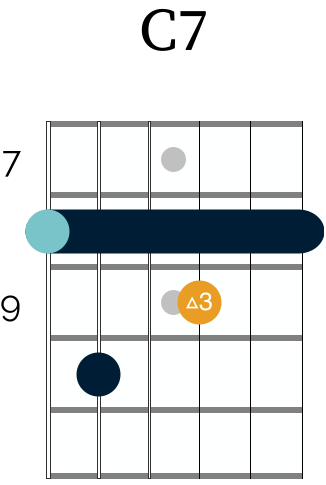
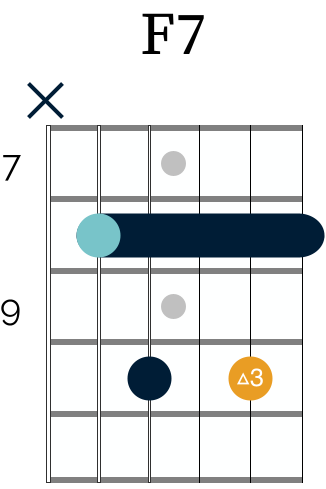

In the C7 the major third is the note of E. Over the IV chord it’s A and for the V chord it’s the note of B – two frets higher.
The third is always a note that carries a lot of flavour, as it tells you the tonality of the chord and spells out clearly whether it’s major or minor.
So if you want to create a warm, major pentatonic sound and also play the changes effectively, locking onto the major third of each chord is a great way of doing that.
You can achieve this by thinking about the full dominant 7th chord shapes outlined above and where the thirds sit within them, or if it is easier, you can also think about the following triad shapes:
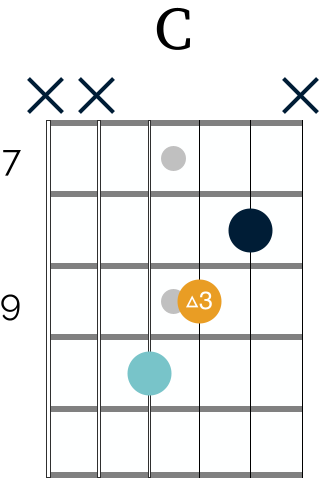


The b7 is missing from each chord, but the more condensed chord shapes can help to make it easier to lock in on the notes you’re targeting. And by locking in on the third you are also bringing through the strongest major flavour possible.
There are so many different ways that you could mix these notes and the major pentatonic scale into your playing.
For example, a simpler starting point would be to play the major pentatonic over the I chord and switch to the minor pentatonic scale when the IV chord arrives. The major third of the I chord creates a clash over the IV, so making that switch keeps things clean and musical. Then mix and match over the V chord before returning to major over the I.
The more nuanced approach is that which is discussed above, which keeps your lead playing closely connected to the harmony in a very specific way.
Finally, the most advanced version combines both ideas – chasing those major thirds over the I and V chords, either switching to the minor pentatonic over the IV chord or playing the major third if you want a warmer sound, and bringing everything to life with vibrato, bending and tone.
This last point is significant, especially if you go deeper into trying to target the chord tones. It’s brilliant to connect your lead ideas to the rhythm part by targeting these notes, but that shouldn’t come at the expense of beautiful blues phrasing that is vocal and expressive.
Closing thoughts
“Have You Ever Loved a Woman?” is a deceptively challenging track that rewards all of the effort that you put into it. The slow shuffle will test your sense of timing, the licks will sharpen your ability to move between rhythm and lead, and the major pentatonic approach will build you confidence targeting the scale in your lead playing.
Perhaps more important than anything, the intensity of Clapton’s playing serves to remind us that in the blues, how you play a note or phrase matters just as much as what you are actually playing.
If you have any questions as you work through these ideas, drop them in the comments below. Otherwise I hope you have as much fun with this track as I did recording that opening solo. Try major, try minor, try a mix, and bring as much vibrato, bending and blues power as you can.
Have fun, and bring the blues power!
Image – Alamy




Responses