
“Since I’ve Been Loving You” is one of my all-time favourite blues rock songs, and one that I love to work on with guitarists.
What makes it instructive for us as guitar players is the way several different ideas come together in one track. The chord progression starts in familiar minor blues territory before taking some unexpected turns in the turnaround.
The intro solo is built almost entirely from the minor pentatonic, but Jimmy Page’s phrasing is unusual and makes it sound much more exotic than the scale alone would suggest. And then there’s his use of the Aeolian mode, which brings two new notes into the mix, and creates different flavours that move beyond standard blues.
There’s a lot to take from this track. Here we’re going to focus on four things: the chord progression and dynamics, dynamics in lead playing, unusual pentatonic phrasing, and the Aeolian mode.
Let’s get into it!
I – The chord progression and dynamics
The full progression in the track is much more complex than a standard minor blues, and looks like this:
Cm | Fm | Cm | Cm
Fm | Fm | Cm | Cm
Gm | Ab / Fm
Cm / G7 / Eb7
D7 / Dbmaj7
The first eight bars are essentially a classic minor blues quick change. So we move from C minor on the i to F minor on the iv, then back to C minor for two bars, F minor for two bars, and C minor again.
That’s the foundation of the whole track, and it’s a big reason why the song still feels like a fairly classic blues despite everything else that’s happening in it.
Once we get to the turnaround though, things change dramatically, as we play:
- Gm for one bar
- Ab major and Fm split across one bar
- Cm, G7 and Eb7 all within a single bar
- D7 to Dbmaj7 in the final bar, then back to C minor
So even though the whole chord progression is only 12 bars, there are more changes across those final few bars than we typically encounter in a full blues progression.
This moves us towards more of a jazz feel, where you will typically encounter many more chord changes in quick succession than you do in the blues.
There are many different voicings you could use to play these chords, but the ones that I use throughout and think suit the vibe of the track are as follows:
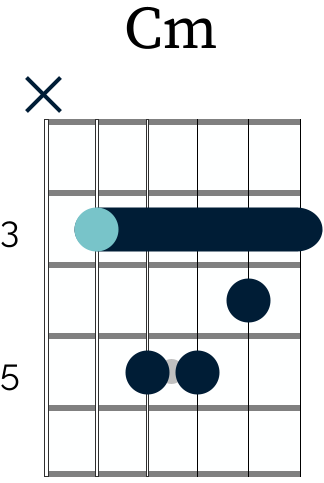
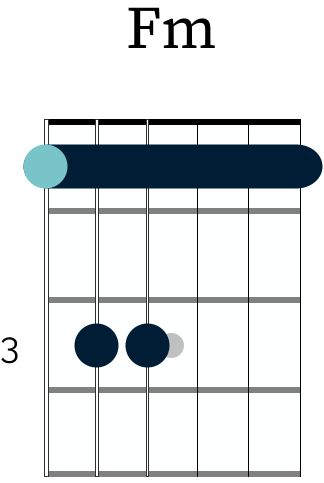
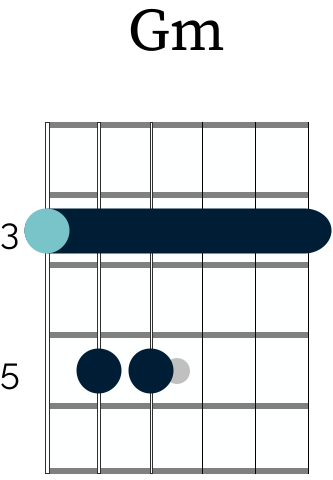
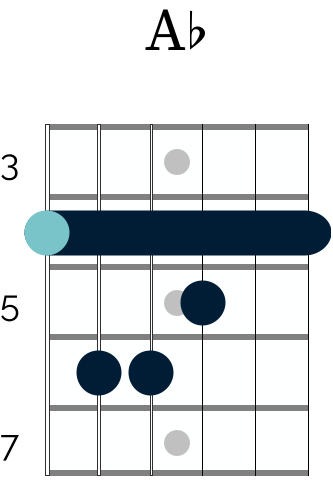
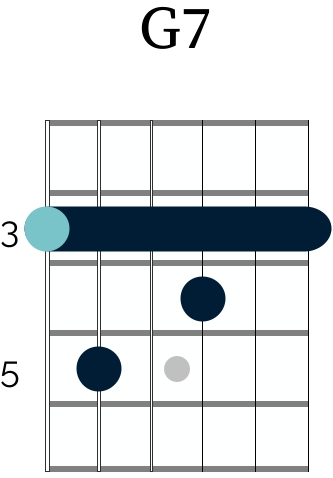
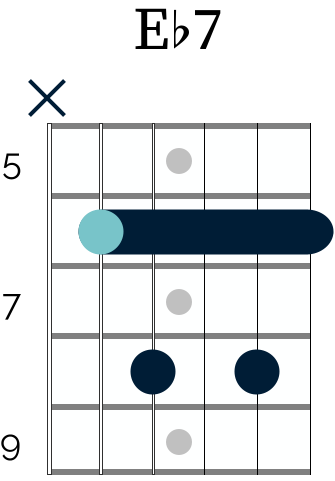
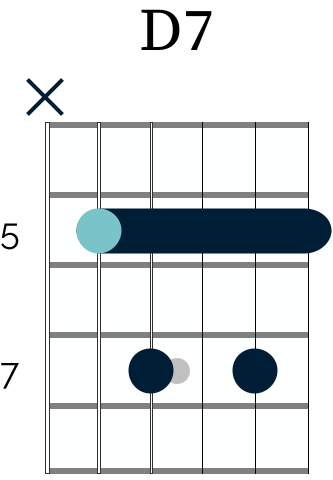
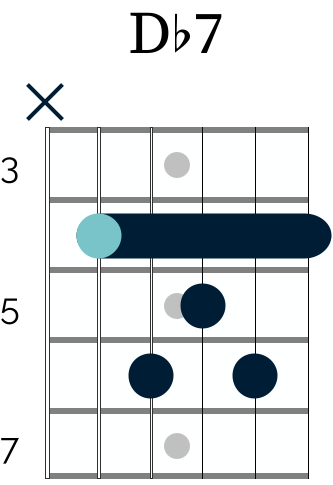
What’s just as important as the chords themselves is how you approach the two halves of the progression. In that opening C minor to F minor section, everything is quiet and restrained – you can sit back on the chords, let that lilting 12/8 feel carry you through and play quietly.
Then when the turnaround arrives, you can totally change the feel of what you’re doing by digging in, playing full chords with downstrokes and a greater level of energy.
That shift from quiet and laid back to powerful and driving is one of the most important things this track can teach you as a rhythm player and is a great way to build your ability to bring life to a chord progression.
II – Dynamics in lead playing
Jimmy Page’s use of dynamics in the opening solo provides us with an amazing example of how to vary your dynamics in your lead playing.
In that opening section he plays some notes extremely quietly, while others come through loud and full. This gives the playing a much more vocal and expressive feel, and it directs our attention to particular parts of the lead playing.
This track is a wonderful illustration of how to vary your dynamics, but once you start listening out, it’s something that you’ll hear all of the time in blues solos. Here are a few of my favourite songs where there is a wide dynamic range in the playing, and where this creates a very impactful lead guitar part:
- Jumping At Shadows – Fleetwood Mac
- Darling You Know I Love You – B.B. King
- Cause We’ve Ended As Lovers – Jeff Beck
- Magnolia – Eric Clapton & John Mayer
To use dynamics in the same way in your solos, I’d recommend going a little extreme at first. Play as loudly as you can, then back off as much as possible, and then find the space in between that feels musical.
Pushing to both ends of the spectrum helps you understand how to vary your dynamics intentionally and in significant ways.
III – Unusual Minor Pentatonic Phrasing
If I had a pound, euro or dollar for every time I’ve heard someone say they feel trapped in the pentatonic box, there would be considerably more guitars on that wall behind me 😆
It’s one of the most common frustrations blues players have – and “Since I’ve Been Loving You” is a great reminder of just how much mileage there is still to get from that scale.
Page is playing mostly in the first shape of the C minor pentatonic, with some movement into the second and third shapes. At times however, his note choices and phrasing make it sound like he is playing something totally different.
For example, just after the 50 second mark in the video lesson above I play a part from the intro solo using the notes highlighted in amber below:
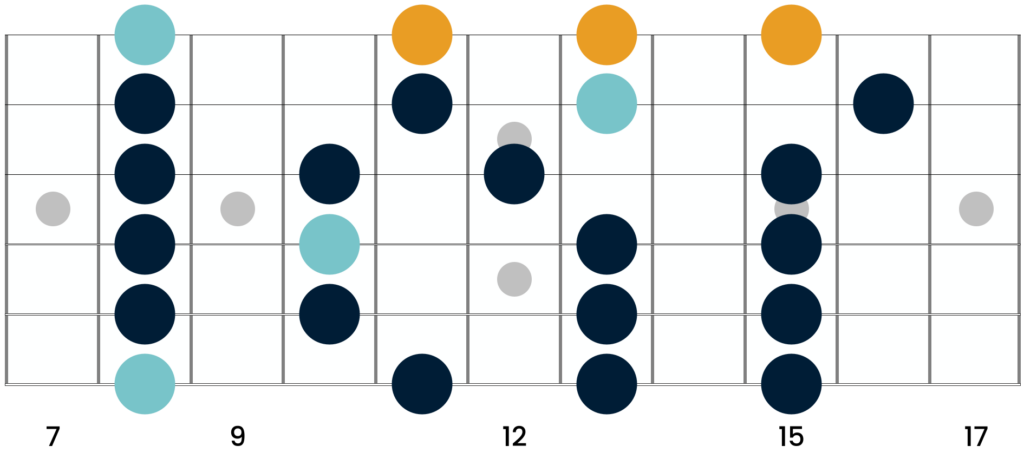
As you can see, these notes simply form part of the second and third shapes of the minor pentatonic scale. However the way that Page targets those notes is unusual and results in a sound that is more exotic than it actually is – there are awkward stretches, unusual note groupings and phrasing that doesn’t feel like classic pentatonic vocabulary.
You can take this specific example and use it in your playing – as you can easily shift it into different keys and contexts. However the broader lesson here is to look at the minor pentatonic with fresh eyes.
Rather than always reaching for the same familiar patterns, start trying to move across it in different and unusual ways. Look to play awkward ideas and stretches and really push yourself to explore new patterns of movement across the fretboard.
Taking this experimental approach will do so much to refresh your phrasing and help you get more from the pentatonic scale.
IV – The Aeolian mode
The final element – and this is an advanced one, so don’t worry if it feels like a lot right now – is that Page is using the Aeolian mode throughout the intro solo.
The Aeolian mode is a seven note scale, and five of its notes are exactly the same as the minor pentatonic.
So the Aeolian mode isn’t a totally alien scale you have to learn from scratch – it’s actually just the minor pentatonic with two new notes added in.
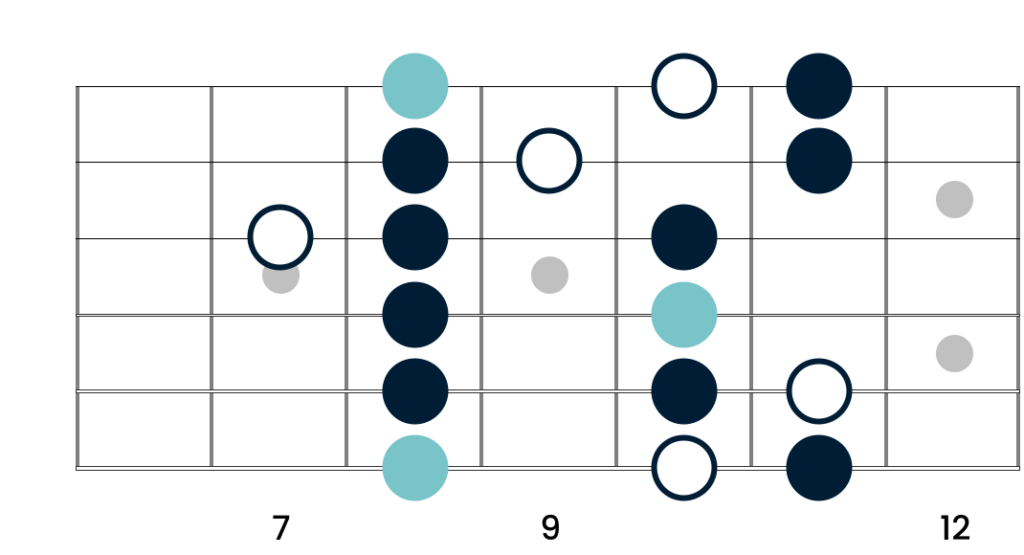
You can see if we look at the first shape of the C minor Aeolian mode and C minor pentatonic laid out next to each other:
Aeolian mode
Minor pentatonic
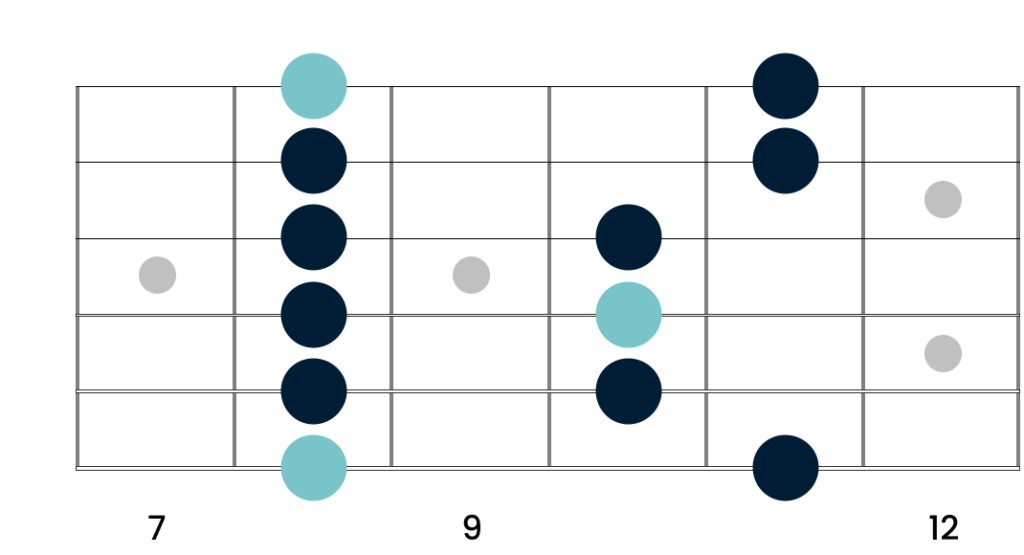
The “new” notes from the Aeolian mode are shown in white here, showing you the five notes from the familiar minor pentatonic scale underneath.
The two new notes
The two new notes of the Aeolian mode that move beyond the minor pentatonic are the major second interval (or 9th when you shift it up an octave) and the flat sixth.
In this position on the fretboard, the major 2nd appears in the following positions:
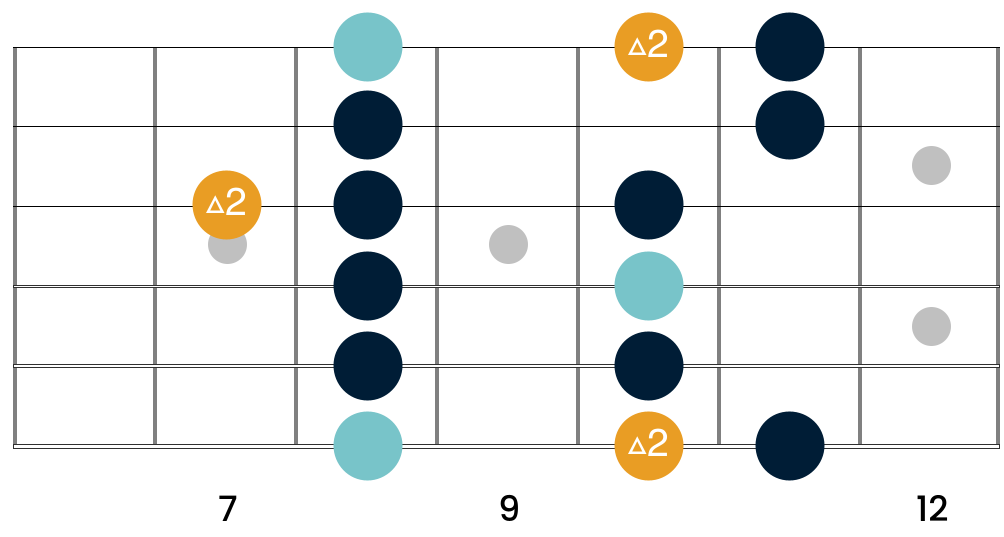
This is one of my favourite intervals, and one that we’ve already encountered as part of the major pentatonic scale.
It’s a very versatile note that you can play over major chords and blues progressions, as well as over minor chords and progressions like “Since I’ve Been Loving You.”
You can pepper it into broader phrases as an extra colour, resolve to it as a target note (as Jimmy Page does in his opening solo), or you can simply add it in sparingly as an extra note within your existing minor pentatonic vocabulary.
You can also bend it up a semitone to land on the minor third from the pentatonic. This works very well, as it brings a new flavour into the mix, before you then move to a familiar note from the pentatonic.
The other note from the Aeolian mode – the b6 – appears in the following positions in the key of C minor:
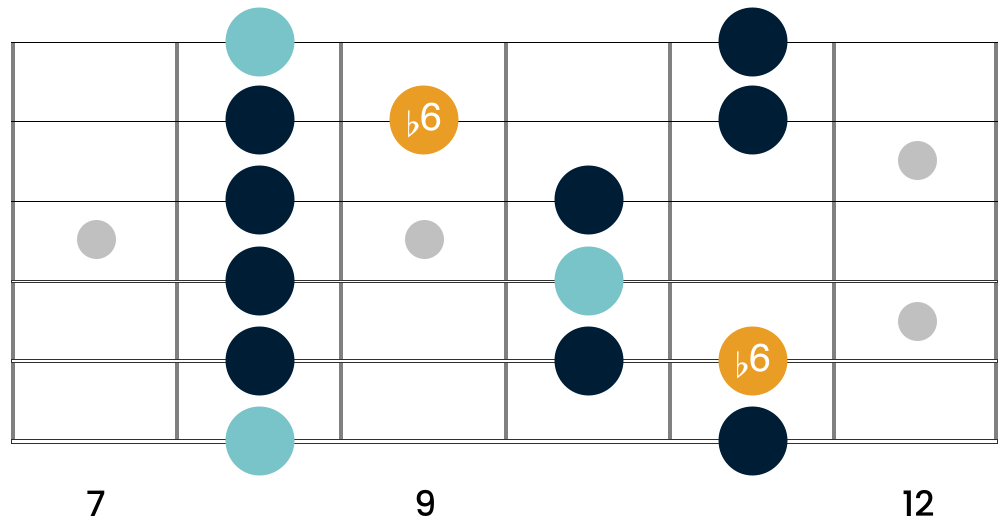
You have to approach this note with a bit more caution.
Over the i chord in any key it will create quite a harsh and tense sound. That tension can work if it’s intentional, but if you land there by accident it’s going to sound off.
However, over the iv chord in any progression, it will sound beautiful. This is because that note is the minor third of the iv chord.
In the key of C minor for example, F minor is the iv chord and the minor third of the chord appears as follows:
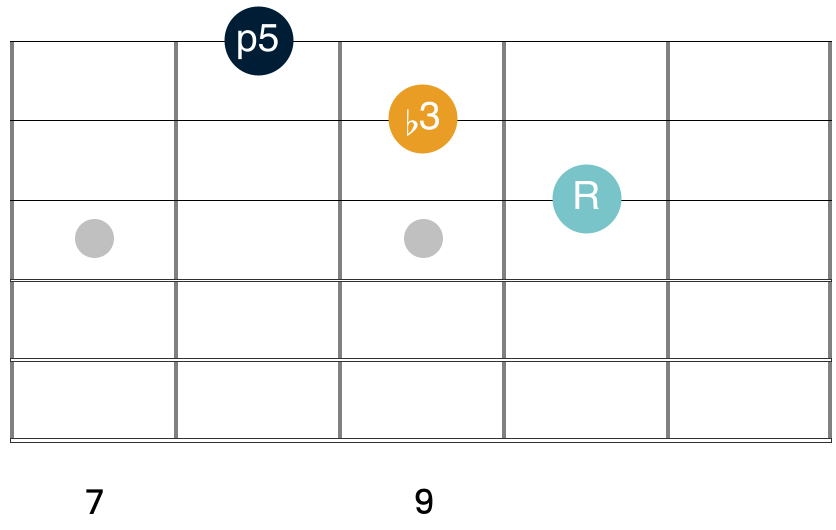
The same note that sounded tense over the i chord suddenly locks right into the new chord.
It’s a great example of playing the changes and how the same note does different things over different chords, and using it at the right moment over the iv chord is going to sound brilliant.
Closing thoughts
“Since I’ve Been Loving You” is one of those tracks that will keep giving back the more time you spend with it. There is so much depth to it – from the chord progression, the Aeolian mode, the dynamics and the unusual phrasing.
None of this needs to be (or can be!) mastered straight away. These are concepts that will continue to develop in your playing for a long time to come, so take your time and don’t worry about feeling confident with all of this right now.
Instead, focus on the fundamentals. Work through the chord progression and get comfortable with the dynamics – playing in a quiet and restrained manner in the opening section, and then digging in when the turnaround arrives.
From there, start bringing some of those lead ideas into the mix. Vary your dynamics in your solos, experiment with unusual pentatonic phrasing, and when you feel ready, start dipping into the Aeolian mode.
Start with the major second – it’s the most accessible of the two new notes and one you can begin using straight away – and then when you feel comfortable, experiment with the flat sixth over the iv chord change.
If you have any questions as you work through these ideas, feel free to drop them in the comments below. Good luck, and have fun with it!
Image – Wikimedia Commons





Responses