
“Comfortably Numb” – How Gilmour Creates Magic With One Pentatonic Shape
The main solo in “Comfortably Numb” is regularly voted one of the greatest guitar solos of all time. It’s also one of my personal favourites, and it’s a solo that we can learn a huge amount from as blues and blues-rock guitarists.
The reason for this is that, apart from one or two notes, almost the entire solo is played using just the minor pentatonic scale. Not only this, but it is focused heavily around just the first shape of the scale.
Blues guitarists often talk about finding this single position limiting and wanting to “escape” it.
However, throughout “Comfortably Numb”, Gilmour illustrates just how much you can do with five notes and a single scale shape.
In this lesson I’ll cover the main concepts you can take from the solo and use in your own playing – whether you’re improvising in a rock context like this, or more of a classic blues setting.
Setting the Scene
Before we start soloing, it’s important to set the scene to understand the chords that Gilmour is soloing over.
The song is in the key of B minor, and it’s a diatonic progression – meaning that it only uses chords from that key. These chords are as follows:
Bm | A | G | Em
And we can play these using simple, open-position chord voicings:
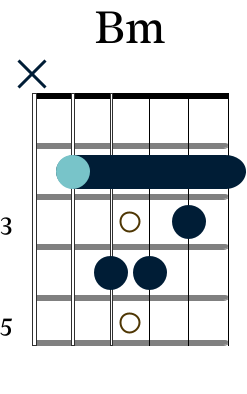
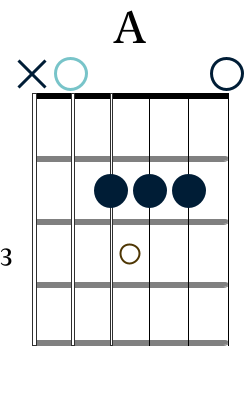
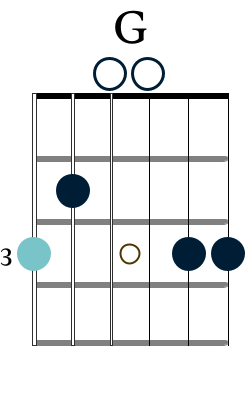
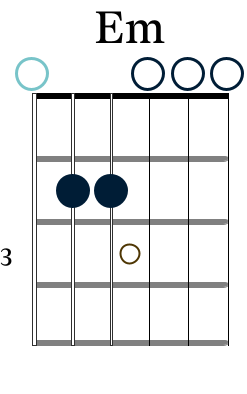
The chromatic passing note F# is added on the 2nd fret of the low E string to lead down from G into Em, but beyond that, the chord progression is about as straightforward as possible.
This means that when soloing, we have two main options:
The first of these – and the focus of this lesson – is to play the B minor pentatonic scale (the B blues scale also works very well). This is a simpler approach and it’s the one that Gilmour actually takes in his solo.
Here are the five shapes of that scale:
B Minor Pentatonic Scale Diagrams
If you feel confident, you can also use the full B minor scale, or Aeolian mode. Compared with the minor pentatonic, this contains two extra notes which have the potential to add some beautiful additional flavours into your solos.
Gilmour doesn’t focus on this scale extensively in his solo, but he does add in one or two notes in certain moments to add more depth to his lead lines (more on this below).
Here are the five shapes of that scale:
As already mentioned, however, Gilmour’s solo is focused heavily around just the first minor pentatonic shape. So apply the concepts outlined below there first, and then work on shifting them around the fretboard.
And with that in mind, let’s get into it!
I – Triplet Runs
One of the best ways to get more from any given pentatonic shape is to use triplets.
Intermediate players often end up playing licks and solos that sound like scales because they play two notes per string and either ascend or descend through the scale without any change in direction.
As they do so, they often play 8th notes, and end up with something that sounds like this:

This example, played at the slow tempo of 63 BPM that “Comfortably Numb” is in, sounds as follows:
Triplets stop your phrases sounding like you are simply running up and down the scale, even though you are using exactly the same notes.
This is partly the rhythm, but it’s also because you are forced to move across the scale in a different way, as you can’t play three notes per string in the pentatonic.
There are many different ways to do this, but a classic idea is one in which you move through the scale by descending through two notes, ascending back up the scale by playing one note and repeating from there, like this:
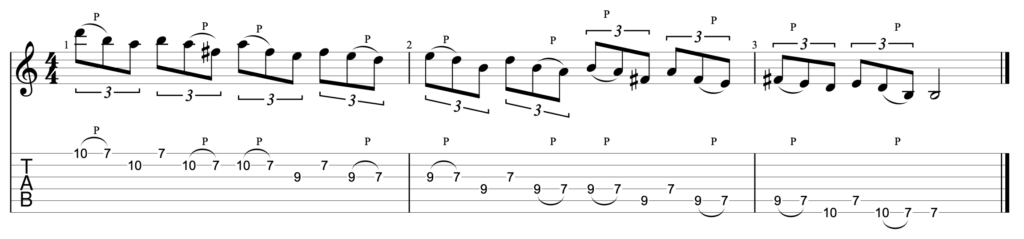
This example sounds like this:
With the tempo of the original track being so slow, Gilmour actually plays 16th-note triplets, rather than 8th-note triplets.
You are still feeling that “1 and a, 2 and a” pulse, but the triplets are now played twice as fast as in this example.
If this is new to you, start slowly, switching between straight 8th notes and triplets, then work up to 16th-note triplets.
Using legato technique (pull-offs) will help here, as it will reduce the technical demand required to synchronise your hands. It also sounds smoother and more musical than picking every note individually.
One final point: you don’t need to run these triplets across a whole scale shape like Gilmour does. Add a couple of triplet groupings, then go back to straight time and play something else.
II – Double Stops
Double stops are a brilliantly simple way of adding power and intensity to your solos without relying on speed, which is how Gilmour ramps up the energy in his solo without playing much faster.
The one double stop that Gilmour plays is very straightforward – just two notes on the G and B strings:
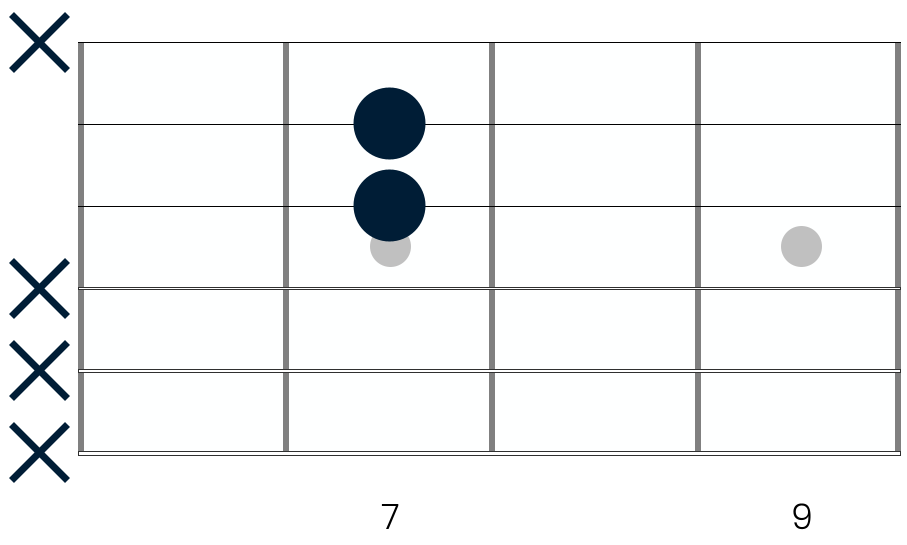
However, Gilmour brings this simple idea to life through:
1.) Vibrato. He pulses the double stop up and down gently, adding vocality and expression.
2.) Tension and resolution. Gilmour manipulates tension and resolution by letting the double stop ring out (which brings tension) and then resolving it to the tonic note (in this case, the note B at the 9th fret of the D string).
3.) Pacing. When he first plays this double stop, Gilmour lets it ring out and leaves space between each idea. As the solo builds in intensity, he closes these gaps – lifting the energy of the passage.
III – Repetition
Don’t be afraid to repeat yourself!
Far from sounding boring, repetition typically brings a very strong sense of structure to your solos. You move away from noodling a bunch of disconnected licks, and instead begin to construct a solo that tells a story.
The solo in “Comfortably Numb” is extremely repetitious. Yet it never sounds boring, because Gilmour makes small changes that keep the playing moving forward.
Take a simple idea and do the same: repeat it, changing one small detail each time.
You’ll be amazed at what it does for your solos, and how much easier improvisation feels when you’re no longer on the hunt for the next new lick.
IV – The Triad Rake
Now it’s time to look at a classic Gilmour move that will immediately add a bit of that same magic to your playing.
There are two steps to this, which we can break down as follows:
Step 1 – The triad rake
Firstly, we need to find the positions of the B minor triads as they appear across the top three strings:
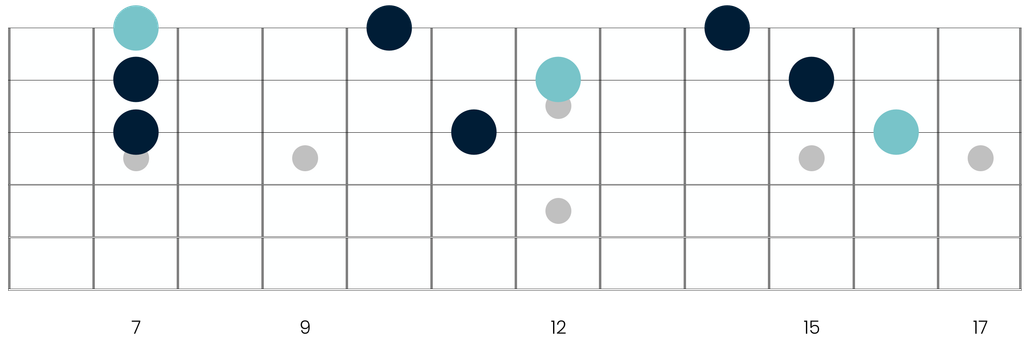
You can apply this idea on any of these triads, but we will be focusing on the shape shown on the far left of the diagram, as it crosses over with the first shape of the minor pentatonic, where Gilmour plays most of his solo.
When we do this, we can actually add a note onto the bottom of the grouping, so it looks like this:
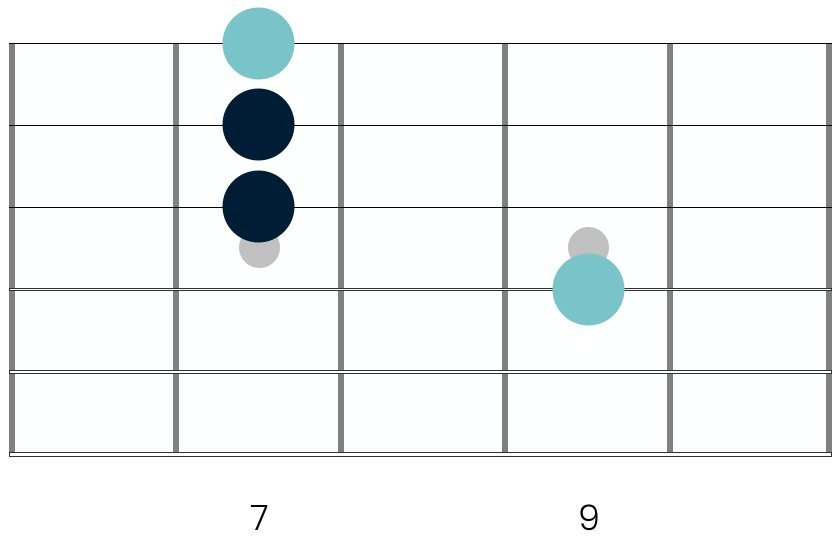
This idea is best explained by video, so check out the section starting around the 20 minute mark in the video above. However the technique here is as follows:
- Put your third finger on the 9th fret of the D string and barre your first finger across the 7th fret of the G, B and E strings.
- Rake the pick down through the strings, rolling the barred finger so each note clips rather than rings out.
- When you get to the top of the shape, either hold the top note or play a short lick afterwards.
This is a nuanced technique, so take your time.
Try it first with the triad sitting within the first shape of the minor pentatonic scale, and then broaden your approach from there.
For example, Gilmour uses the same technique on a D major triad in the first solo in “Comfortably Numb”, and Mark Knopfler uses it in the opening of “Sultans of Swing”, amongst other tracks.
Step 2 – Add the major 2nd
In the triad shape illustrated above, once you rake through the triad you can add the major 2nd interval at the 9th fret, as shown:
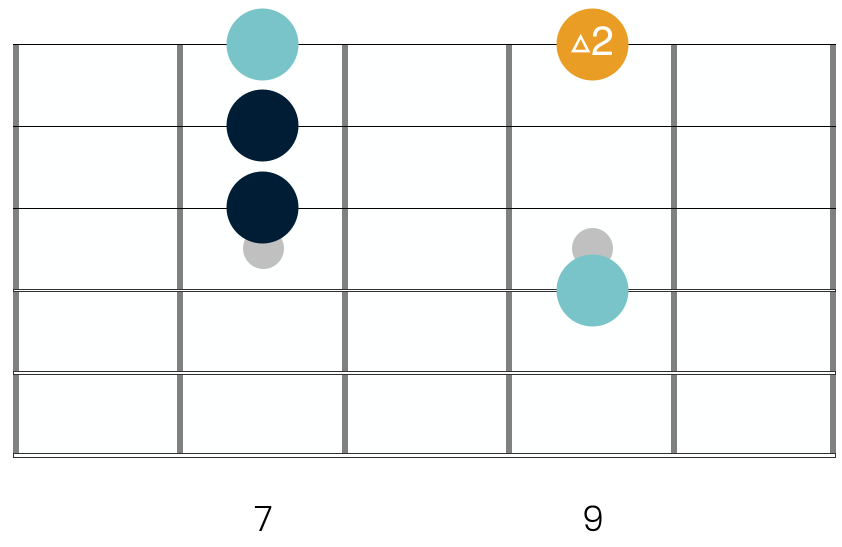
That note is from the natural minor scale, or Aeolian mode, and it sits one fret below the minor 3rd, which is one of the five notes from the minor pentatonic.
You can simply play the note, but I recommend bending it up a semitone into the minor 3rd. This is what I do in the short section of playing that starts around 19:20:
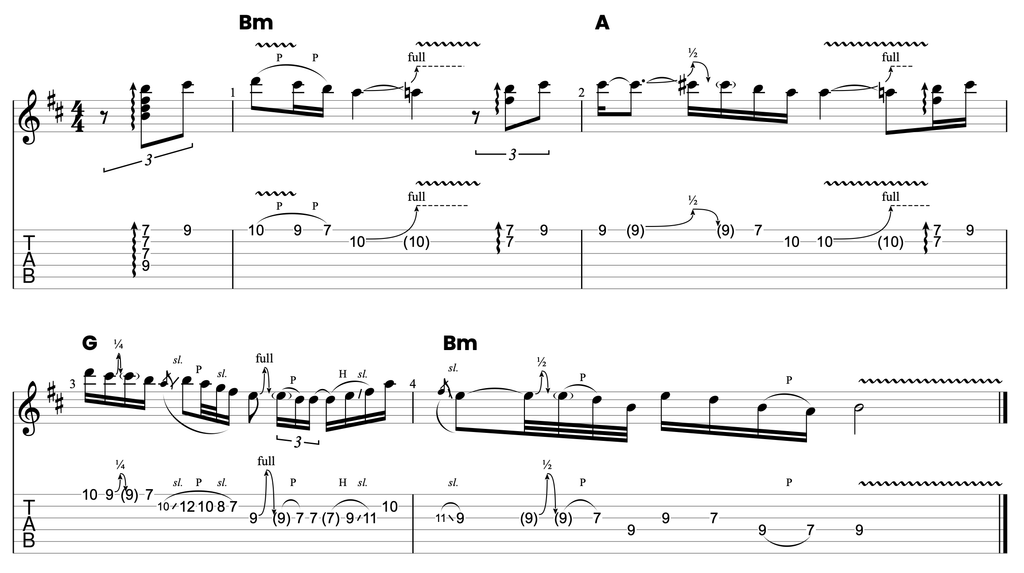
Here is how that lick sounds:
This is tricky to get precise, so start with the rake alone and add the major 2nd once it feels secure.
V – Register
You can play a whole range of awesome licks one after the other, and still not craft a very effective solo.
This is the trap that so many intermediate guitarists fall into, and it’s often what stands between them and the improvisations they hear in their head.
To move beyond simply playing licks, you have to look at your solo at a higher level, and think about how it tells a story.
Gilmour is a master of this. Every single solo he plays takes us on a journey and moves us from point to A to point B.
Many different elements go into this, but one of the more common approaches Gilmour uses is to move his solos from starting slow and low to finishing high and fast.
He often begins his solos in the lower registers of the guitar, and leaves more space between each lick. Then as the intensity and power of his solo builds, he moves up the fretboard.
You can hear this at the end of his solo in “Comfortably Numb”, when he jumps all the way to the upper frets of the guitar. He also adopts the same broad approach in a whole range of different solos, including:
Once you hear this arc you’ll spot it everywhere – both in Gilmour’s solos, and in so many of the classic rock and blues rock solos that you love.
If you want to really nail this approach, then you need to be able to move smoothly between the shapes of the minor pentatonic scale all over the fretboard.
If you don’t feel totally confident with that just yet, then I lay out an easy four-step system that you can follow in this lesson. Go through those and you’ll be able to copy that slow and low to high and fast arc in no time!
Bringing It All Together
To bring all of these ideas together and give you a template you can copy and adapt to help you get started, here is an improvisation in the style of the original:
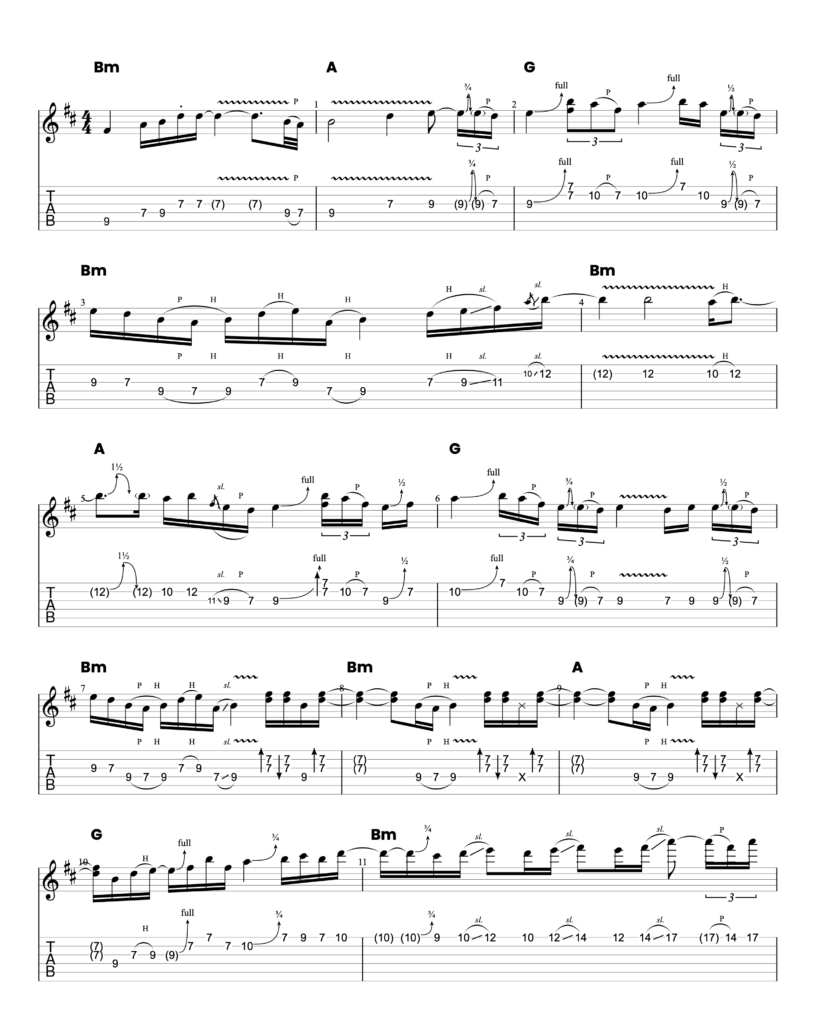
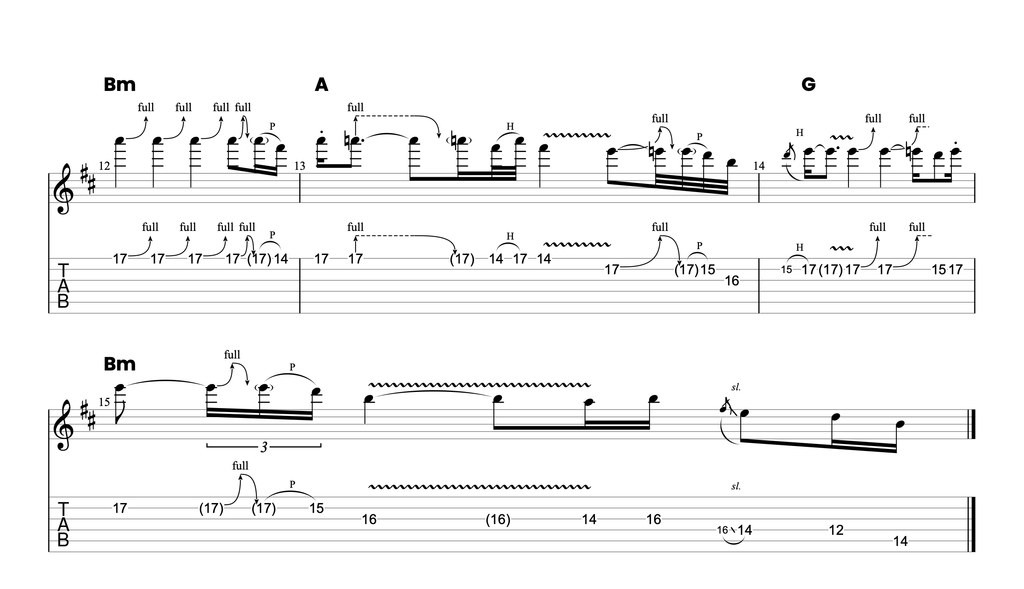
Here is how this solo sounds:
If it’s helpful, use this to give yourself some ideas to get started. Then adapt them and make them your own.
Do the same with the original solo that Gilmour plays, as well as any live versions that you like – and you’ll add the same feel to your playing without sounding like you are simply imitating.
Good luck, and I hope you have fun with it! 😁