
As with any scale or box shape, we have to learn how to use the notes to create music; we don’t want to just play up and down the box shape without thinking about technique and phrasing.
At this point then, we can focus on taking the notes of the B.B. King Box and turning them into beautiful licks and phrases. There are two different elements to this challenge, which are as follows:
Firstly, it is important to be intentional with your use of the B.B. King Box and the kind of sound you want to create. As already discussed, you can target a warmer and more upbeat sound with the box, or a slightly more melancholic and aggressive sound.
You can of course mix these sounds indiscriminately and create a range of interesting ideas. However, your licks and solos will sound more coherent and will flow more effectively if you think about the kind of sound and feel you want to create before diving into your playing.
Beyond that, the challenge is around how to use the B.B. King Box in the broader framework of a solo, and how to use techniques and phrasing to bring these ideas to life in an interesting and musical way.
With that in mind there, here are three different ideas I like to target when using the B.B. King Box:
Staying in position
The first way I like to use the B.B. King Box, is by playing it alongside the notes of the third shape of the minor pentatonic scale.
In the key of G, this shape appears as follows:
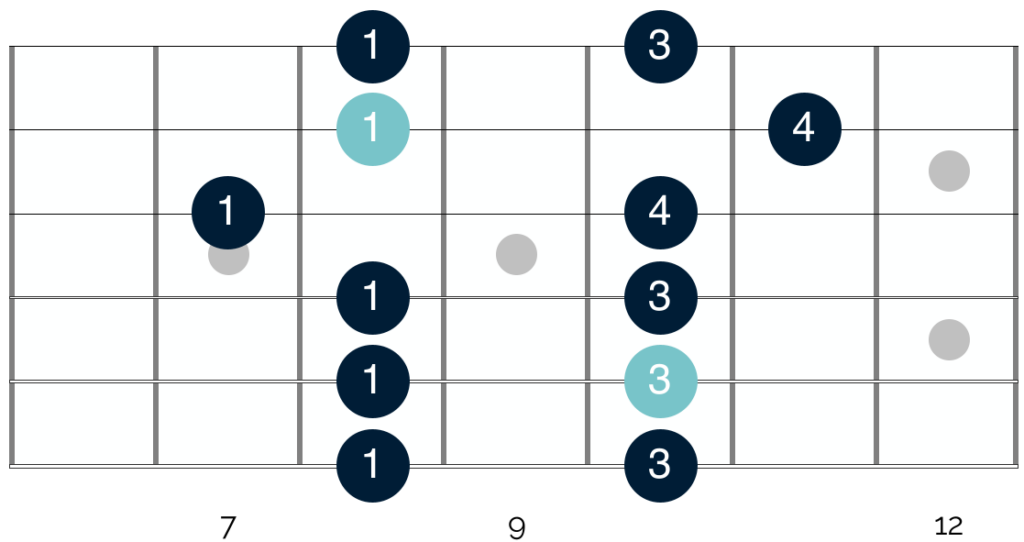
The B.B. King Box sits firmly within this section of the fretboard, and actually contains 3 of the same notes. You can see this on the diagram below. This shows the same notes of the minor pentatonic scale, alongside the notes of the B.B. King Box, all of which have been highlighted in yellow:
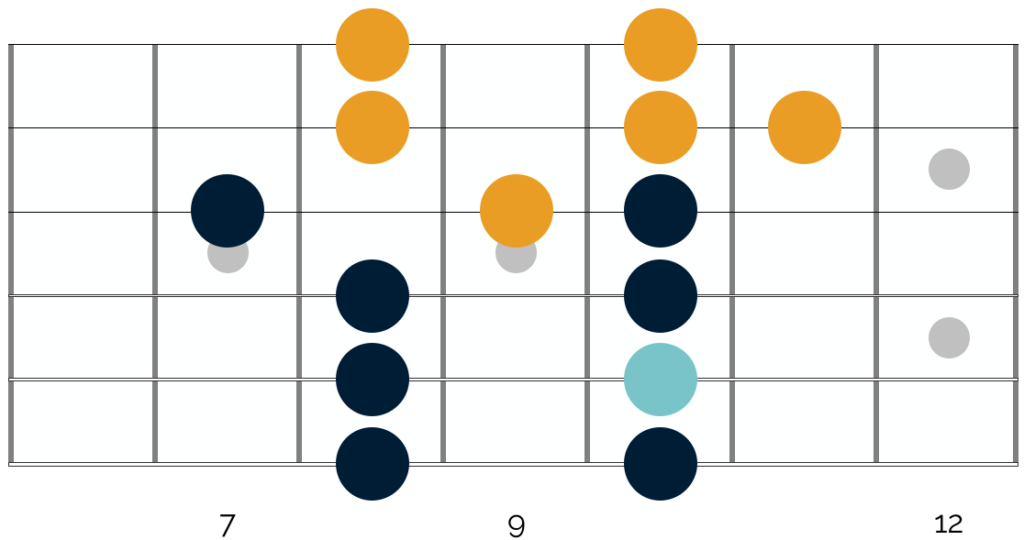
As such, by just sticking in this single position on the fretboard, you can create a wide range of different licks and ideas.
I illustrate just some if the possibilities around the 2.30 minute mark in the video, where I play the following:
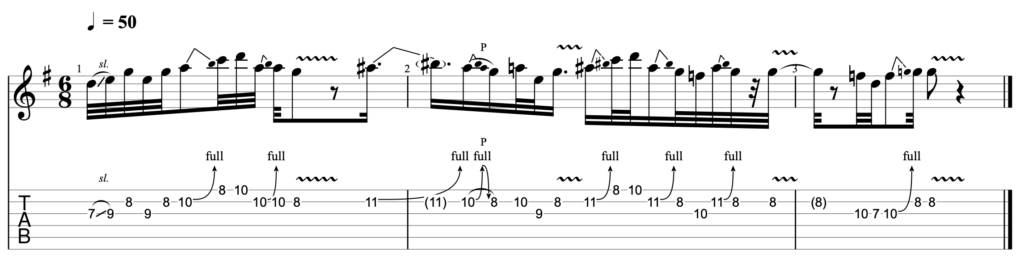
At 50 BPM, this is how the isolated guitar part for this sounds:
Try the same in your improvisations. Think about playing in the B.B. King Box and dialling in a range of warm blues licks. Then, alter your mental framework to instead target the notes of the minor pentatonic.
This small mental switch will create a totally different sound in your playing and allow you to get a lot of mileage from a contained section of the fretboard.
Sticking major
The two further ways I often like to use the B.B. King Box are quite similar, but produce a very different feel and sound in your playing.
They also work very well if your knowledge of the fretboard is perhaps a little more limited, and you don’t yet feel so comfortable navigating between the B.B. King Box and other sections of the neck.
The first of these ideas is to drop back down the fretboard to the second shape of the major pentatonic scale. In the key of G, this shape is as follows:
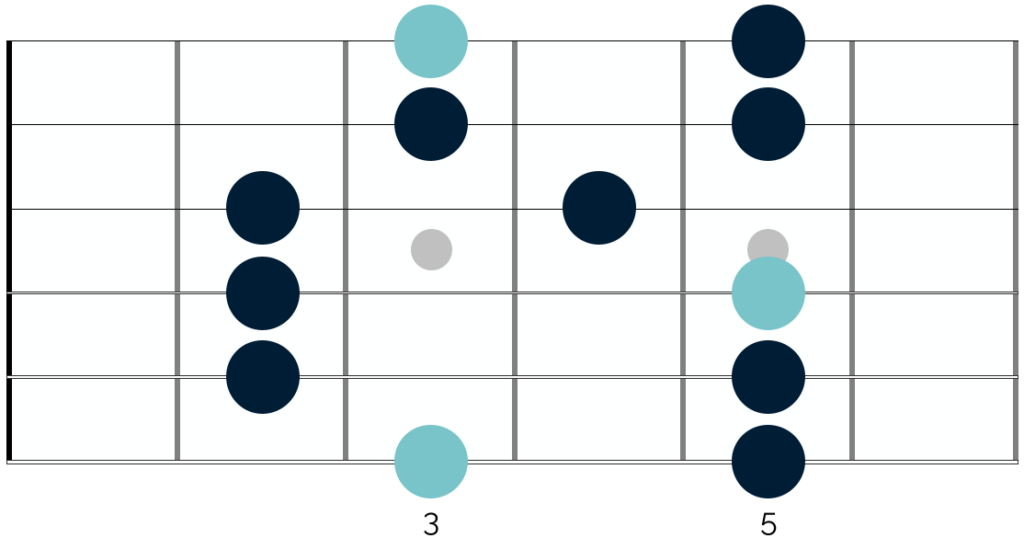
This is the approach I took for the opening solo in this course, which I have tabbed out in full and added in as the final lesson.
Dropping down into this shape of the scale allows you to maintain a warm and upbeat major sound in your playing, whilst navigating to a different part of the guitar and introducing new textures into your solo.
Switching to minor
The alternative, is to move to the same section of the fretboard, but to target the first shape of the minor pentatonic scale. In the key of G, this is how this looks:
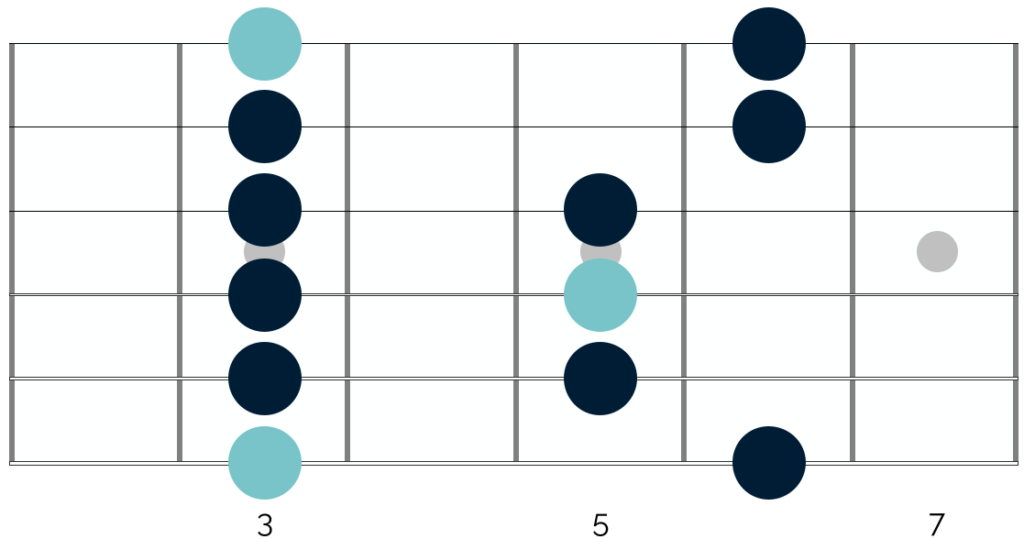
Making the switch from the B.B. King Box down to this shape will totally alter the sound of your playing. You will move from a warm, upbeat sound into one that is much more melancholic and aggressive.
You can hear what this sounds like from around the 5.45 minute mark, when I play the following:
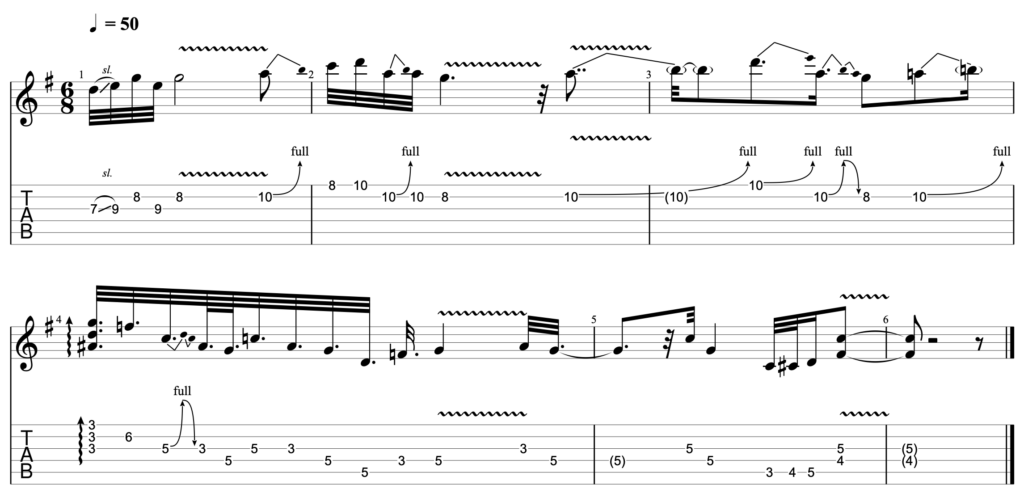
At 50 BPM, this is how the isolated guitar part for this sounds:
Next steps
These are just as couple of ideas to help you get started. They are of course by no means exhaustive, and even within these frameworks, there are a wide range of further options to consider.
To provide just one example of this – I start my ideas in the B.B. King Box, and then move down into the lower sections of the fretboard. However, you could take the opposite approach. You could start in the lower registers of the guitar, and move up to play in the B.B. King Box.
The melodic material of the idea is the same, but the sound in your improvisations will be totally different.
So, try these ideas out and experiment with ways of altering them to get even more mileage from your playing. Then when you are ready to do so, head over to the next lesson, where we’ll look at a number of further interesting ways you can use the B.B. King Box in your solos! 😁