
If you feel comfortable with the B.B. King Box and combining it with the lower registers of the fretboard, then you can start to create some beautiful connecting ideas by adding the Albert King Box into the mix.
If this is new to you, then don’t worry! I have an entire course on the Albert King Box, where I run through what it is and how it works, and where I provide a variety of licks to help you get started.
As a quick recap however, the Albert King Box is a 5 note box shape, composed of notes from the minor pentatonic scale.
In the key of G, it looks like this:
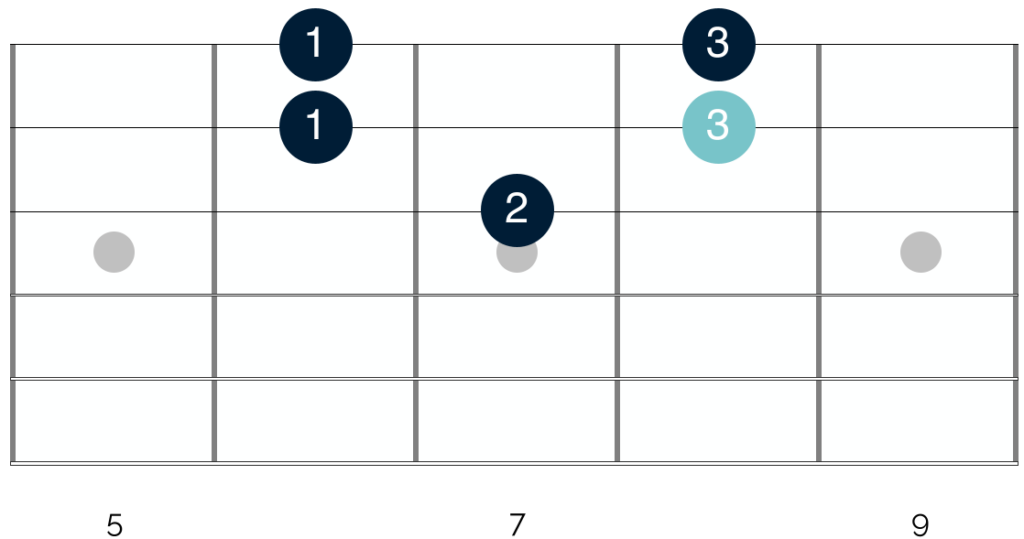
As you can hopefully see, the fingering used to play the box shape is very similar to the B.B. King Box. Not only this, but the box shape sits just 2 frets behind the B.B. King Box.
You can see this on the following diagram, which shows both box shapes:
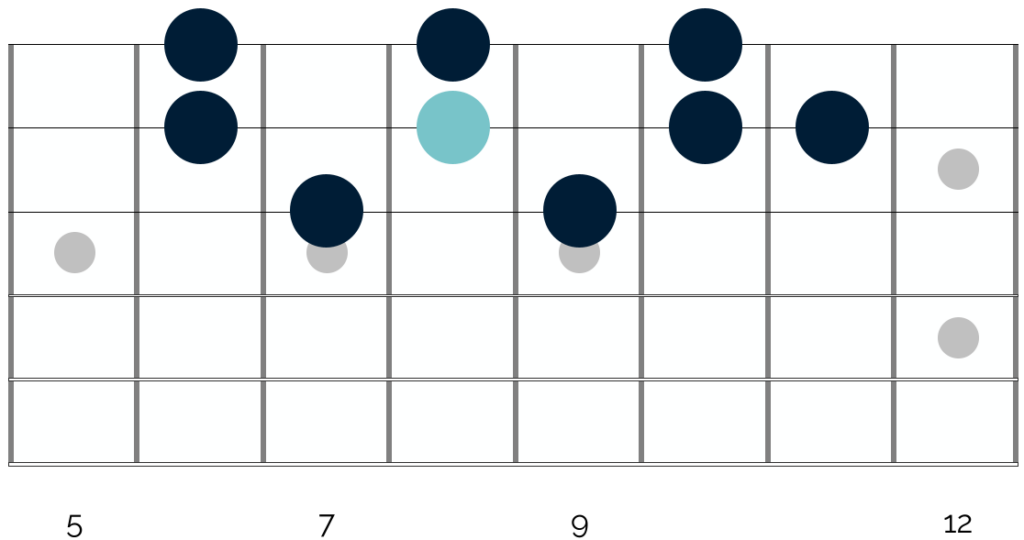
The B.B. King Box sits on the right of this diagram, with the Albert King on the right. As you can hopefully see, the two boxes share notes, including the tonic note of G (shown here in light blue at the 8th fret on the B string).
This proximity, and the fact that the shape and fingering for the two boxes is so similar, means that it is easy to move between them and create a variety of different ideas, as I illustrate around the 1 minute mark in the video above.
As you can hopefully see, although the two boxes are similar in shape, they sound very different. The B.B. King Box has that warm and more upbeat sound, whilst the Albert King Box has more bite, and a much heavier minor sound.
By mixing the two boxes in your playing you can move between those two sounds in a very smooth way, and recreate the vibes of two of the greatest blues guitarists of all time.
Joining the dots
The additional benefit of using these two box shapes together is that they help you to connect the B.B. King Box with the shapes of the minor and major pentatonic scales discussed in the last lesson.
You can see this if we add the first shape of the minor pentatonic scale alongside the Albert King and B.B. King boxes:
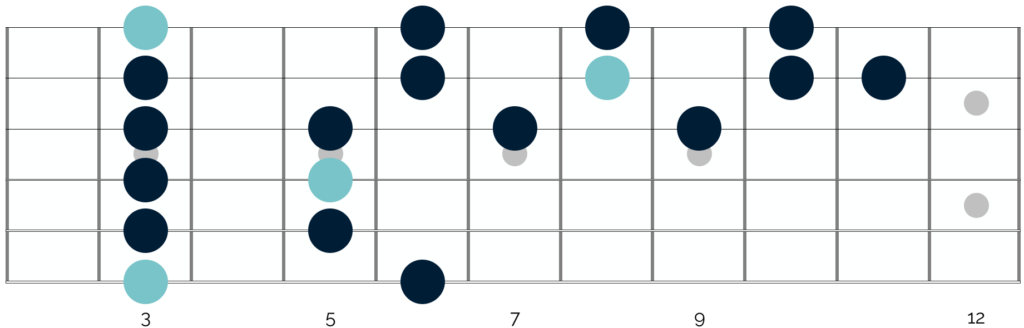
This framework is particularly effective if you feel less comfortable navigating around the fretboard. You can start in the first shape of the minor pentatonic, play through the Albert King Box and then target the notes of the B.B. King Box (and you can of course do the same in reverse).
The same connections exist between the second shape of the major pentatonic scale and the two box shapes. You can see this on the following diagram, which shows the Albert and B.B. King boxes alongside the second shape of the major pentatonic:
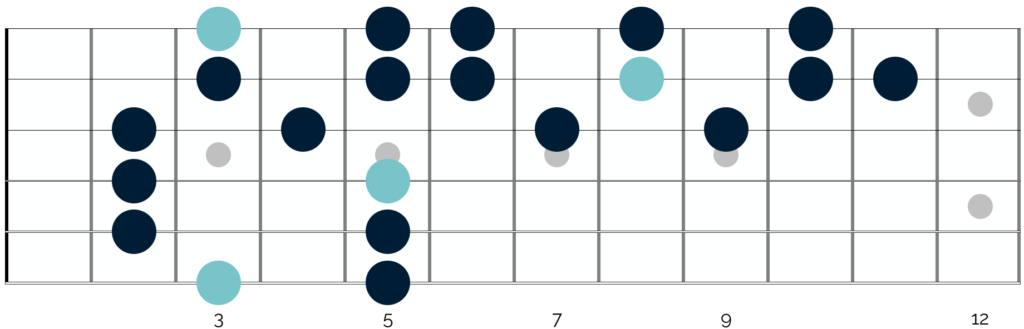
As in previous lessons, experiment with these frameworks and make them your own. Test out different ideas, and pay close attention to the sound and character of your solos at any given moment.
Listen out for the major and minor mix in your solos and the effectiveness of how you blend the two tonalities. Not only will this help you craft beautiful solos, it will also improve your ability to move beyond the minor pentatonic scale and craft ideas using the major pentatonic.
“Notes are expensive”
As you work on merging these box shapes – and in fact whenever you play using the B.B. King Box – think about the style of King’s playing.
As King himself once said – “Notes are expensive, spend them wisely.” In my opinion, this particular box shape lends itself well to more restrained licks, where you place a lot of focus on the quality of each note, and where each phrase has time to breathe.
Conversely, the Albert King Box lends itself to a more intense style of playing, reminiscent of Albert King’s approach.
So in addition to thinking about the overall blend between the major and minor tonalities, pay attention to the way that you articulate when playing in the B.B. King Box – and how you alter that articulation when you move to other sections of the fretboard.
Finally, experiment with all of the different ways you move across the B.B. King Box, and how you combine it with the other box shapes and scales discussed here.
It is always tempting to think that the secret to better blues solos lies in more scales and knowledge. However it is in fact what you do with those scales which really makes a difference to the quality of your playing.
Now, to help you get started on that, head over to the next series of lessons, where I run through 5 licks which use the B.B. King Box, and which will help to provide you with ideas in your own playing. See you over there! 😁